
Certificates of Analysis
Independent third-party testing for this product. Tap a report to view the data.

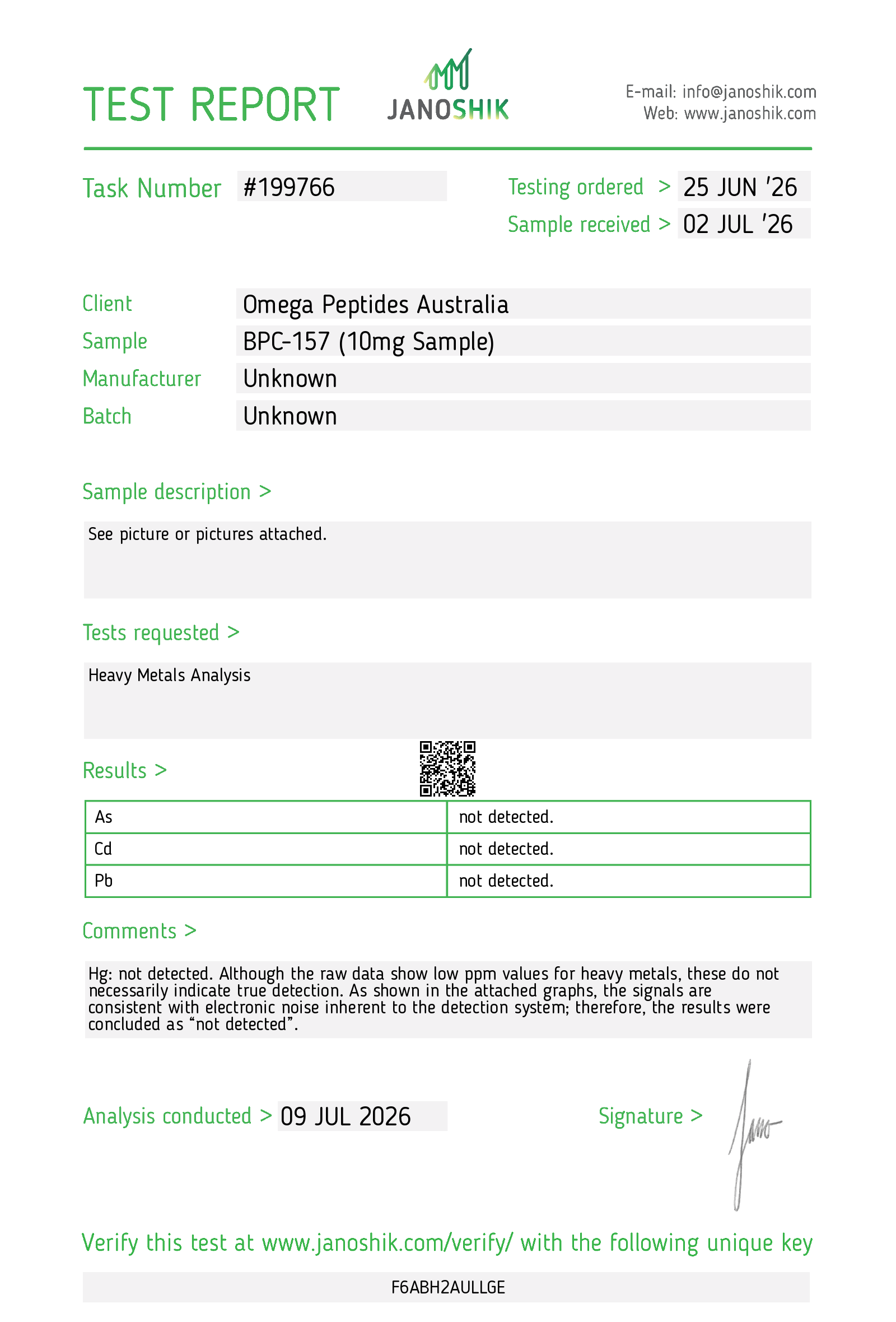
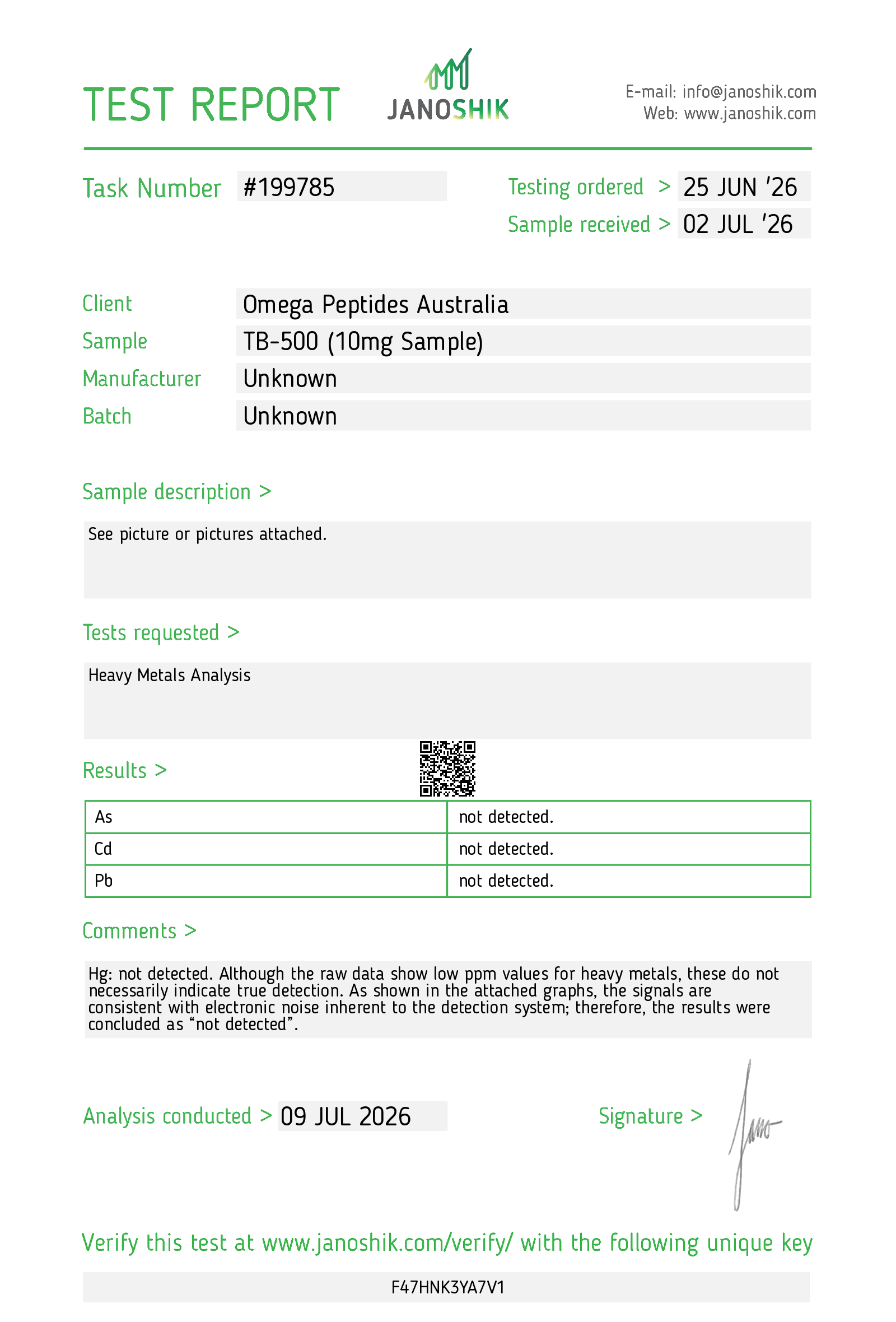
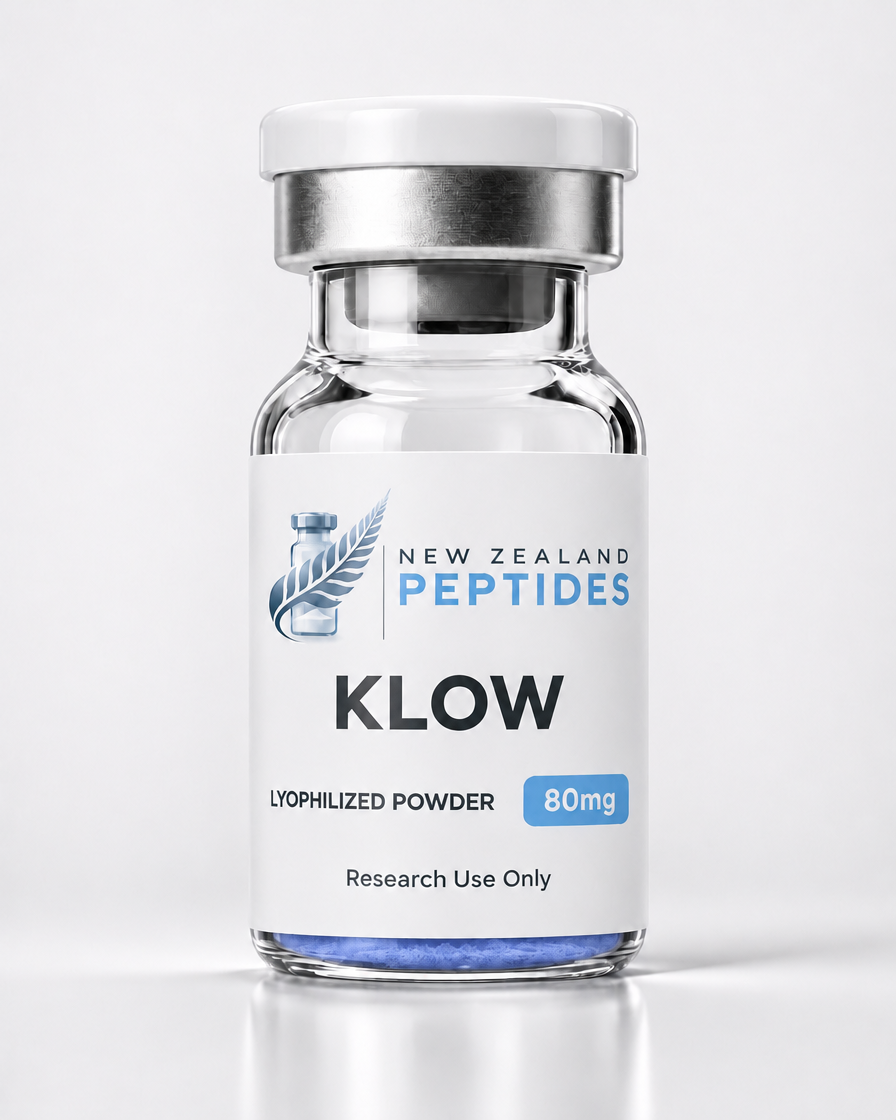
KLOW (80mg): Four-Peptide Skin, Repair and Inflammation Research Blend
KLOW is a research blend of four separately studied peptides supplied in one lyophilised vial: 50mg of GHK-Cu, 10mg of BPC-157, 10mg of TB-500 and 10mg of KPV, 80mg of peptide in total. The name is a product name, not a compound: GLOW is the three-peptide base (GHK-Cu, BPC-157, TB-500), and KLOW is the version with KPV added. The blend exists so that a study looking at skin remodelling, soft-tissue repair and inflammatory signalling at the same time can use one preparation at a fixed ratio instead of four.
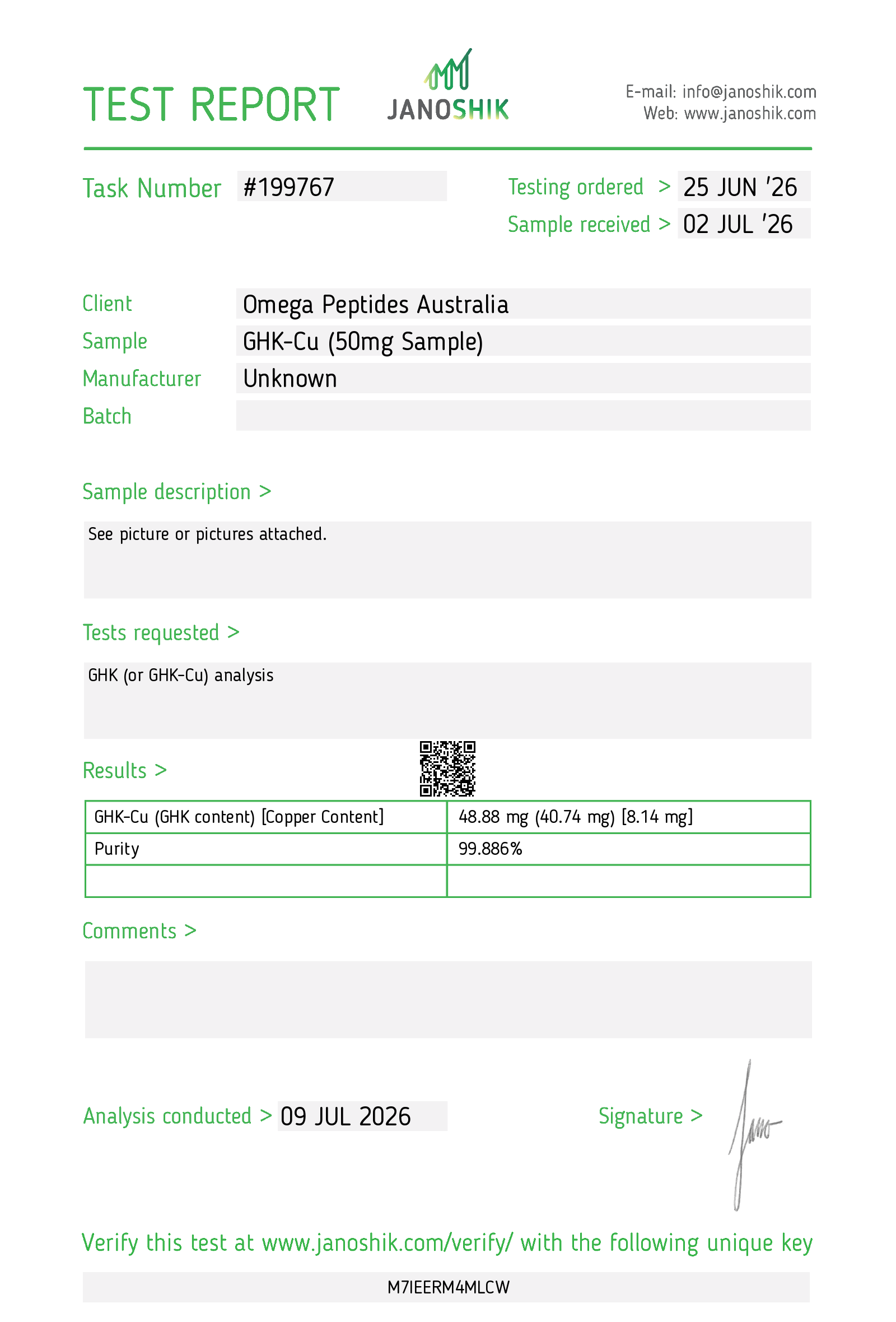
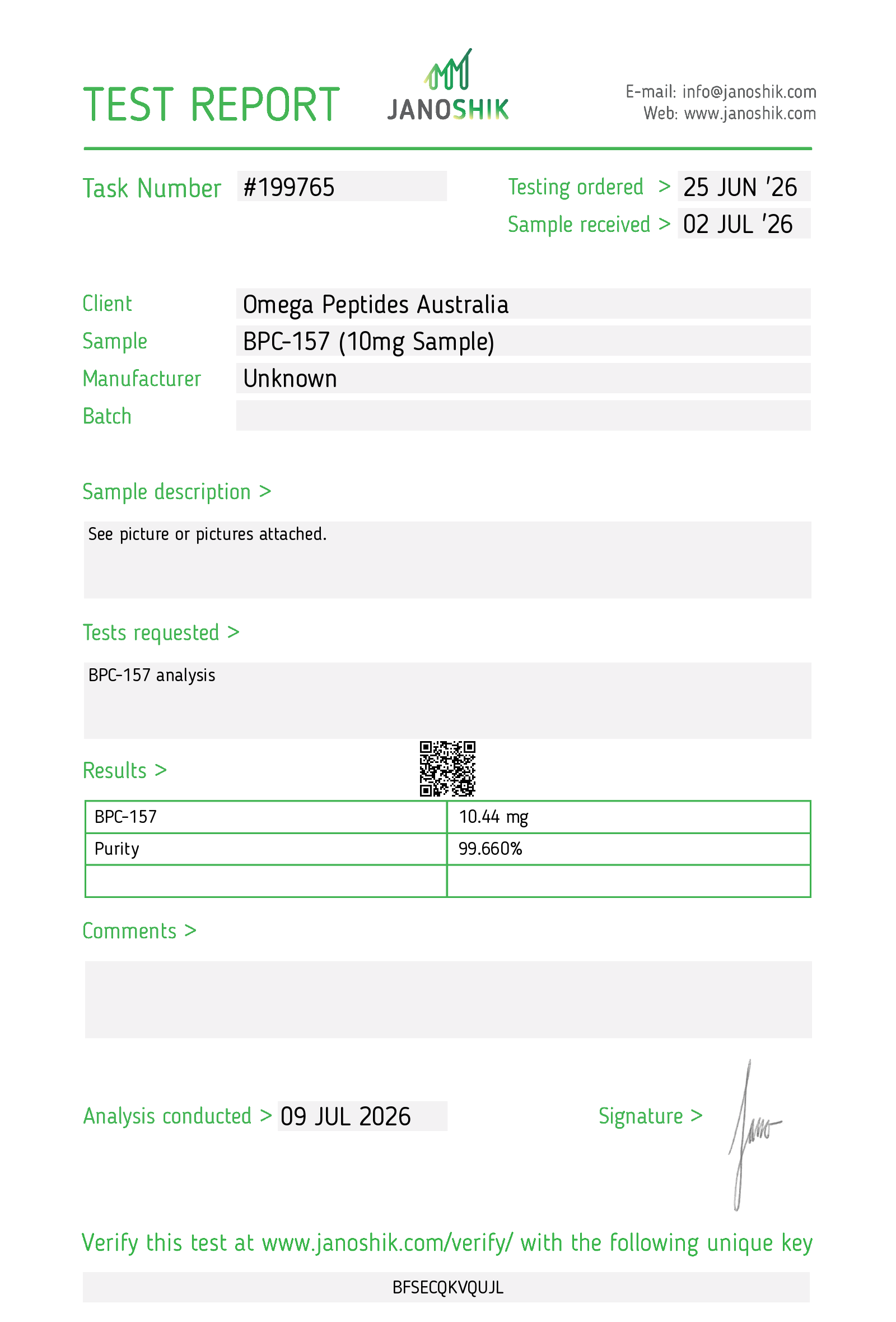
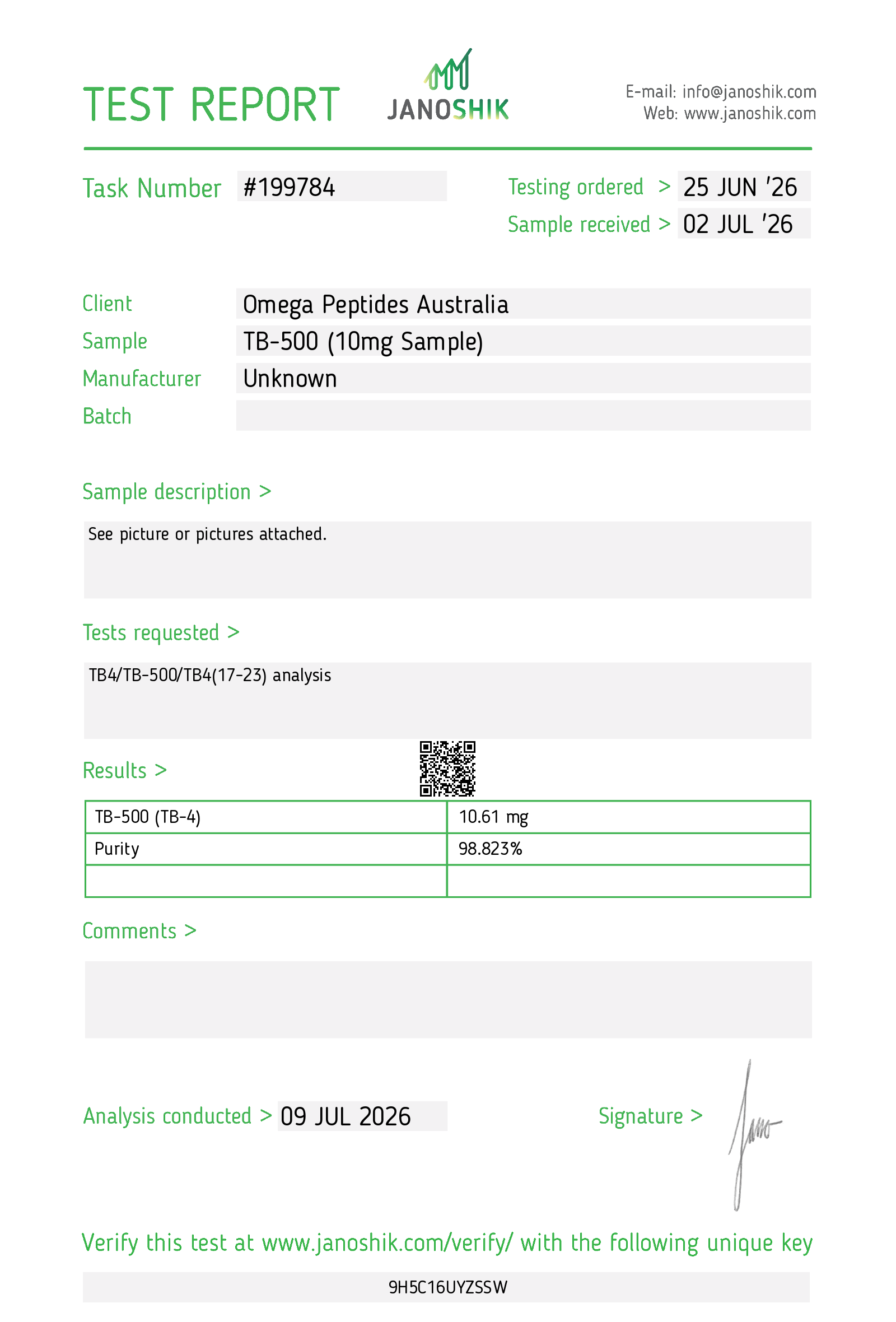
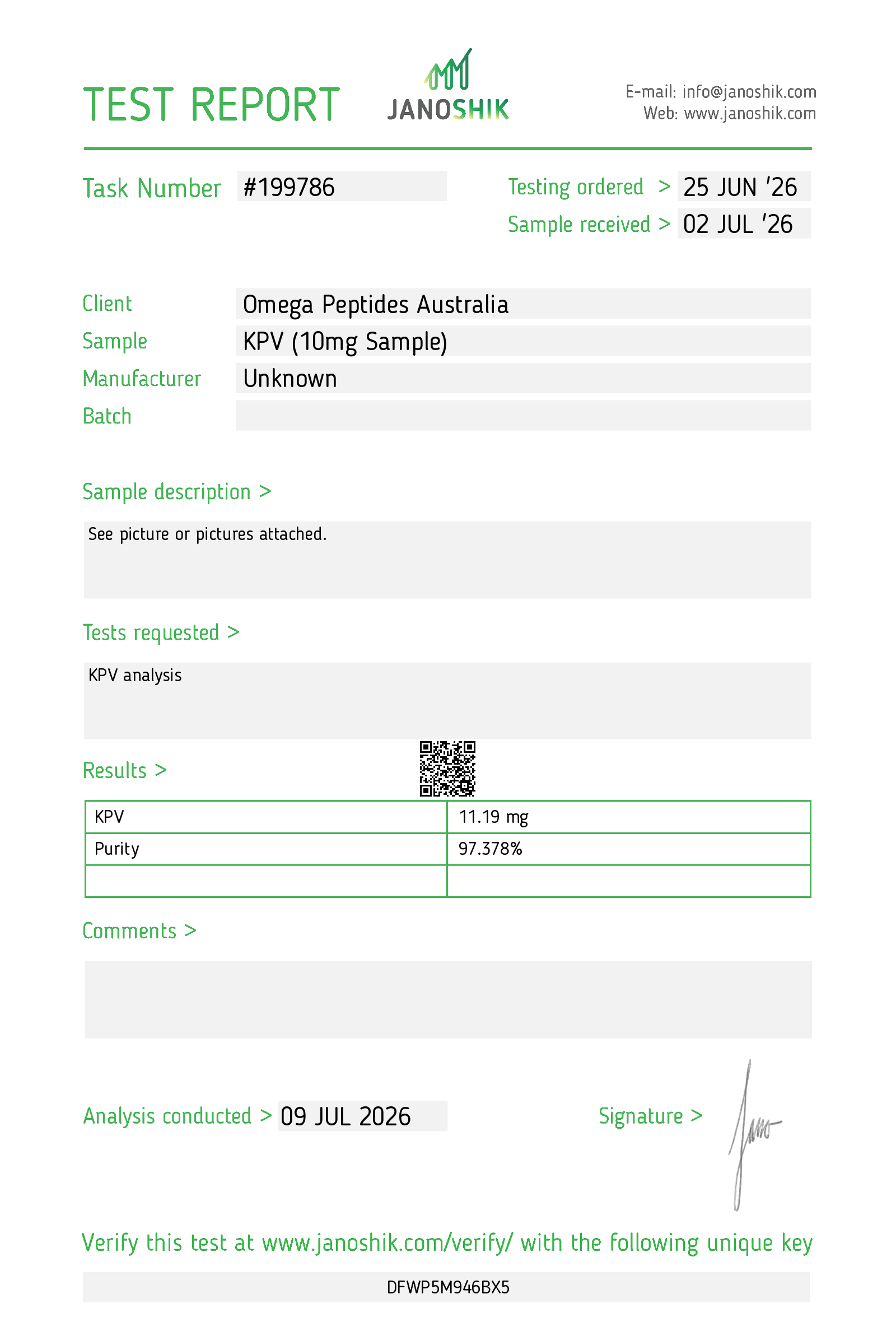
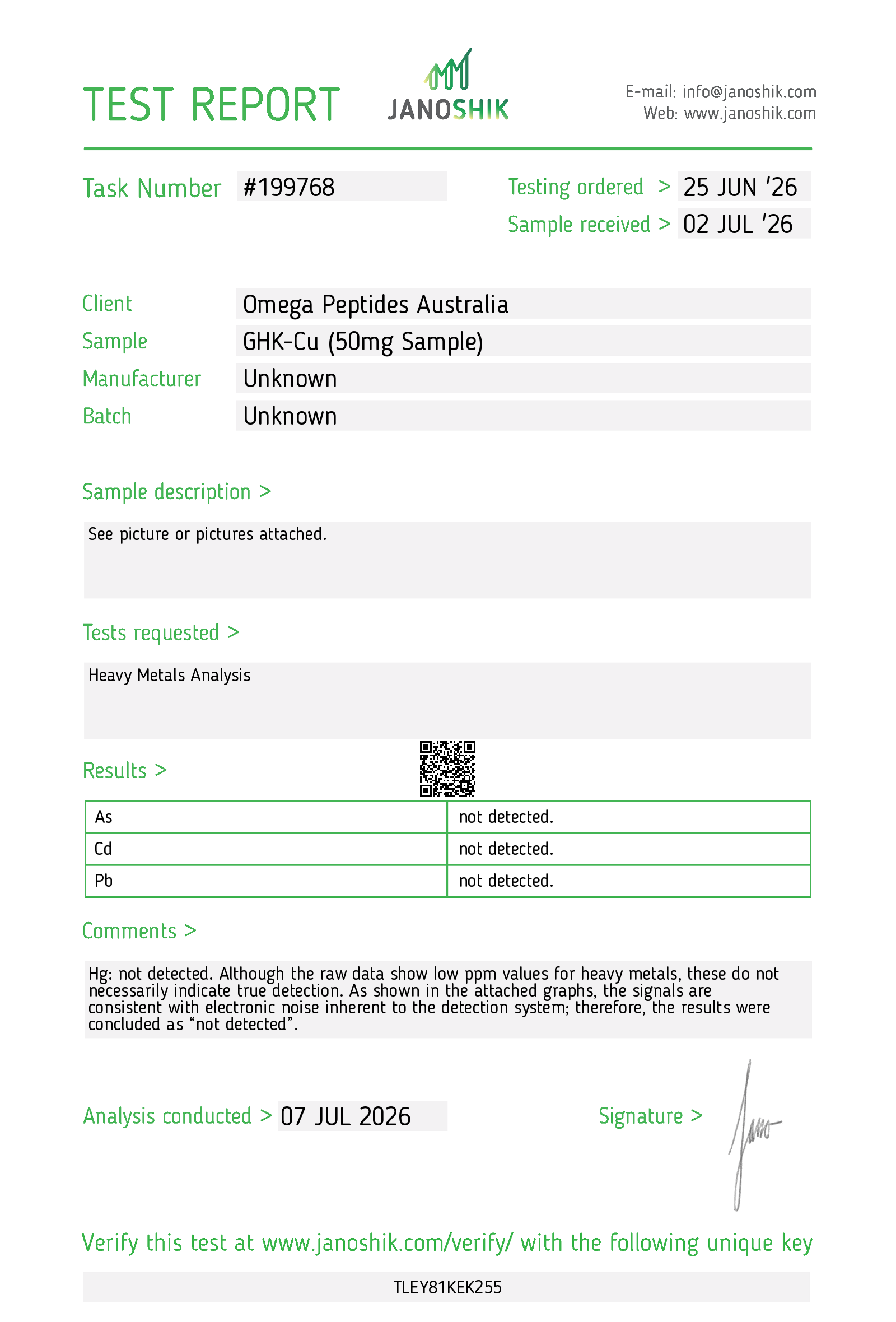
Each component in this vial was tested individually by Janoshik Analytical on 9 July 2026: GHK-Cu 99.89% (batch #199767), BPC-157 99.66% (batch #199765), TB-500 98.82% (batch #199784) and KPV 97.38% (batch #199786). All four certificates are published in our COA library.
What each peptide contributes
GHK-Cu (50mg). The copper tripeptide is the largest component by mass and drives the skin and collagen side of the blend. In fibroblast models it increases collagen, elastin and glycosaminoglycan synthesis, and in wound models it recruits repair cells and promotes angiogenesis. It is supplied on its own as GHK-Cu (50mg).
BPC-157 (10mg). A fifteen-amino-acid peptide derived from a protective protein in gastric juice, studied for tendon, ligament, muscle and gut repair through VEGFR2, nitric-oxide and FAK-paxillin signalling. Supplied on its own as BPC-157 (10mg).
TB-500 (10mg). A synthetic fragment of thymosin beta-4 that regulates actin polymerisation, which is how cells migrate into an injury site. Studied for wound closure, angiogenesis and reduced inflammation. Supplied on its own as TB-500 (10mg).
KPV (10mg). The C-terminal tripeptide (Lys-Pro-Val) of alpha-melanocyte-stimulating hormone. It is the anti-inflammatory component: in cell and colitis models it inhibits NF-kB activation and reduces pro-inflammatory cytokine release without the pigmentation effects of the full hormone. Supplied on its own as KPV (10mg).
Key research areas
Skin and dermal remodelling. The GHK-Cu content makes KLOW a frequent choice for full-thickness skin models, scar remodelling and topical-formulation work where matrix synthesis and inflammation need to be measured together.
Soft-tissue and tendon repair. BPC-157 and TB-500 are the most commonly paired repair peptides in preclinical research, acting on growth-factor signalling and cytoskeletal remodelling respectively. In KLOW they are present at a 1:1 ratio by mass, the same ratio as our BPC-157 + TB-500 blend.
Inflammation. KPV adds an NF-kB-inhibiting signal, which is why KLOW rather than GLOW is chosen for designs where inflammatory markers (TNF-alpha, IL-6, IL-1beta) are the primary readout.
Gut and mucosal models. BPC-157 was first characterised as a gastroprotective peptide and KPV has been studied in colitis models, so the two together are used in intestinal-barrier and mucosal-healing research.
How the blend is used in research
The fixed ratio (50:10:10:10 by mass) is the main reason to use the blend. Four peptides prepared separately introduce four weighing and dilution steps; one vial gives a consistent preparation from batch to batch. Because the peptides differ in molecular weight (GHK-Cu 401.9, BPC-157 1419.6, TB-500 889.0, KPV 342.4 g/mol), the molar ratio is not 5:1:1:1, which is worth calculating when a protocol is written in molar terms. Studies that need a different ratio, or that want one peptide as a control, use the individual vials alongside the blend. The three-peptide GLOW blend is the version without KPV.
Specifications
| Compound | KLOW blend (GHK-Cu 50mg, BPC-157 10mg, TB-500 10mg, KPV 10mg per vial) |
| Also known as | KLOW peptide blend, KLOW stack, KLOW 80mg |
| CAS numbers | GHK-Cu 89030-95-5; BPC-157 137525-51-0; TB-500 885340-08-9 (fragment); KPV 67727-97-3 |
| Molecular formulae | GHK-Cu C14H22CuN6O4; BPC-157 C62H98N16O22; TB-500 fragment C38H68N10O14; KPV C16H30N4O4 |
| Molecular weights | GHK-Cu 401.9; BPC-157 1419.6; TB-500 fragment 889.0; KPV 342.4 g/mol |
| Sequences | GHK-Cu Gly-His-Lys (copper complex); BPC-157 GEPPPGKPADDAGLV; TB-500 Ac-LKKTETQ; KPV Lys-Pro-Val |
| Category | Skin, tissue-repair and inflammation research |
| Purity | Each component tested by Janoshik Analytical (9 July 2026): GHK-Cu 99.89% (#199767), BPC-157 99.66% (#199765), TB-500 98.82% (#199784), KPV 97.38% (#199786) · certificates in the COA library |
| Form | Lyophilised powder in a sealed sterile vial |
| Vial size | 80mg — $149.99 (about $1.87 per mg) |
| Storage (lyophilised) | 2–8°C short term or −20°C long term, protect from light and moisture, avoid repeated freeze-thaw |
| Storage (reconstituted) | 2–8°C, use within 28 days |
| Reconstitution | Bacteriostatic water (recommended); the solution is pale blue from the copper complex |
Sizes and pricing
- 80mg vial — $149.99 (about $1.87 per mg of total peptide)
Multi-vial pricing (80mg): 2 vials $269.98 (10% off, $134.99 each), 3 vials $393.72 (12.5% off, $131.24 each), 4 vials $509.97 (15% off, $127.49 each). The discount is applied automatically in the cart.
Bought separately, the four components come to $369.96 (GHK-Cu $89.99, BPC-157 $99.99, TB-500 $99.99, KPV $79.99), so the blend is the lower-cost route to the combination. The individual vials remain the right choice when a protocol needs a different ratio or single-peptide controls.
Quality and COA verification
A blend is only as reliable as its weakest component, so each of the four peptides in KLOW is tested on its own at Janoshik Analytical before blending. HPLC establishes purity and content for each, and mass spectrometry confirms each identity against its expected mass. The four batch numbers are listed in the specification table and each report can be opened from our COA library or checked on Janoshik’s verification portal.
Vials are lyophilised, sealed and kept in stock. Orders placed before 12pm on a business day are dispatched the same day on tracked delivery.
Frequently bought together
- GHK-Cu (50mg) — $89.99, the copper tripeptide on its own for skin and collagen studies
- BPC-157 (10mg) — $99.99, the single-compound vial for repair models that need more BPC-157
- TB-500 (10mg) — $99.99, the actin-binding peptide for migration and angiogenesis designs
- KPV (10mg) — $79.99, the anti-inflammatory tripeptide as a standalone control
- Bacteriostatic Water (10mL) — $29.99, the recommended diluent for reconstitution
Research guides
- KLOW research guide
- GHK-Cu research guide
- BPC-157 vs TB-500
- How to reconstitute peptides
- Peptide reconstitution calculator
Frequently asked questions
What is the difference between KLOW and GLOW?
GLOW is the three-peptide blend of GHK-Cu, BPC-157 and TB-500 (70mg). KLOW adds 10mg of KPV for a total of 80mg. Choose KLOW when inflammatory signalling is part of the study design; choose GLOW when the focus is skin and tissue repair alone.
How much is KLOW, and is it cheaper than buying the four peptides?
The 80mg vial is $149.99, about $1.87 per mg, and drops to $127.49 per vial on a four-vial order. The same four peptides bought as single vials cost $369.96, so the blend is around 60% less for the equivalent amounts.
Is KLOW available as tablets or capsules?
No. KLOW is supplied only as a lyophilised powder for reconstitution. GHK-Cu, TB-500 and KPV are not studied in oral form, and the blend is designed for solution-based laboratory work.
How is KLOW reconstituted?
Add bacteriostatic water slowly down the inside wall of the vial and swirl gently until clear; do not shake. The solution will be pale blue because of the GHK-Cu copper complex. Remember that the concentration you calculate is total peptide across four components in a 50:10:10:10 mass ratio. Our calculator handles the maths.
How should KLOW be stored once reconstituted?
At 2–8°C, protected from light, and used within 28 days. The lyophilised vial keeps at −20°C long term. Do not freeze the reconstituted solution.
Can the ratio of peptides in KLOW be changed?
Not within the vial; the 50:10:10:10 ratio is fixed. Protocols that need more of one peptide add it from the individual vials listed above, which is also how single-peptide control arms are usually built.
Where can I buy KLOW in New Zealand with certificates of analysis?
Directly from this page. New Zealand Peptides holds KLOW in stock, tests all four components at Janoshik Analytical and publishes the reports before the vial ships. Orders before 12pm are dispatched the same day.
⚠ For in-vitro research and laboratory use only. Not for human or veterinary use.