
Research Use OnlyNot for Human Consumption
Tracked ShippingNZ-Wide

Category: News

  • COA Testing Explained | Research Peptides New Zealand

    COA Testing Explained

    Understand what a Certificate of Analysis (COA) is, why it matters for research peptides, and how it supports consistency and transparency when sourcing in New Zealand.

    A Certificate of Analysis (COA) is one of the most important quality documents associated with research peptides and laboratory materials. It provides detailed information about a specific batch, helping confirm identity, purity, and consistency.

    At New Zealand Peptides, COA verification plays a key role in supporting transparency and reliability when sourcing research peptides for laboratory use.

    What Is a Certificate of Analysis?

    A COA is a laboratory-issued document that outlines the characteristics of a specific batch of material. For research peptides, this may include purity levels, analytical methods, batch references, and testing results.

    This documentation helps confirm that a product aligns with its stated specifications and has undergone appropriate analytical testing.

    Why COA Verification Matters

    When sourcing research peptides in New Zealand, COA verification helps provide confidence in product consistency and quality. This is particularly important in environments where repeatability and controlled handling are essential.

    • Supports batch-to-batch consistency
    • Helps verify compound identity
    • Provides insight into purity levels
    • Improves transparency across supply
    • Assists with quality review prior to research use

    Understanding Purity in Research Peptides

    Purity refers to the proportion of the intended compound present within a tested sample. Many research peptides are supplied with high purity specifications supported by analytical testing methods such as HPLC.

    Products such as BPC-157, TB-500, and GHK-Cu are commonly associated with COA-supported quality documentation.

    Common COA Testing Methods

    COA reports often reference analytical techniques used to assess compound properties and consistency.

    • HPLC: Commonly used to assess purity
    • Mass spectrometry: Used to support identity confirmation
    • Batch referencing: Links results to a specific production run

    Browse COA-Verified Research Peptides

    Explore available research peptides with secure NZ-wide shipping.

    VIEW ALL PRODUCTS

    COA Verification and Batch Consistency

    Consistency across batches is essential in research environments. COA documentation helps provide clarity around what is being supplied and supports repeat sourcing where required.

    This level of transparency contributes to a more reliable experience when sourcing research peptides in New Zealand.

    Supporting Laboratory Materials

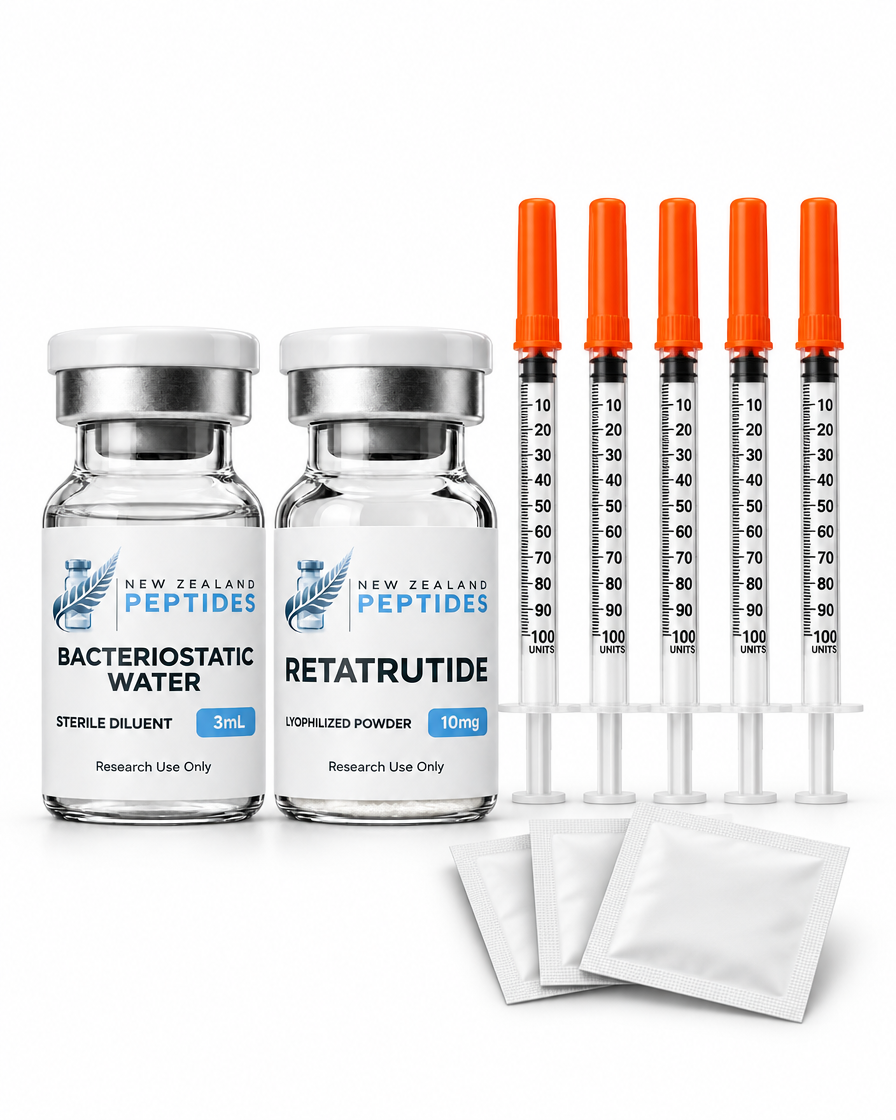
    In many research workflows, supporting materials such as bacteriostatic water are used alongside peptide compounds to support controlled preparation processes.

    Related Research Products

    Sourcing Research Peptides in New Zealand

    New Zealand Peptides provides access to high-purity research peptides with COA-supported verification, secure packaging, and reliable delivery.

    Browse best-selling products or view the full product range.

    Frequently Asked Questions

    What does COA verified mean?
    It means a product has supporting laboratory documentation confirming key quality markers such as identity and purity.

    Why is COA important?
    It helps ensure consistency, transparency, and confidence when sourcing research peptides.

    Do all products have identical COAs?
    COA documentation may vary depending on the compound, batch, and testing method used.

    Important Notice: This content is for informational purposes only. All products are supplied strictly for laboratory research use only.
  • Peptide Storage Guide | How to Store Lyophilised Peptides Properly

    Peptide Storage Guide

    Learn how lyophilised research peptides are stored, handled, and maintained in laboratory environments to support stability, consistency, and product integrity.

    Proper peptide storage is essential for maintaining compound stability and consistency in laboratory research environments. Environmental factors such as temperature, moisture, and light exposure can influence compound integrity over time.

    At New Zealand Peptides, research peptides are supplied in formats designed to support stability, secure handling, and reliable transport across New Zealand.

    Why Peptide Storage Matters

    Research peptides are sensitive to environmental conditions. Maintaining stable storage conditions helps preserve their structure and reliability across research applications.

    • Supports consistency across batches
    • Reduces degradation risk
    • Maintains product integrity
    • Improves reliability in laboratory settings

    What Does Lyophilised Mean?

    Lyophilised refers to a freeze-dried format where moisture is removed from the compound. This process helps improve stability during storage and transport.

    Many research peptides are supplied in this format, including BPC-157, TB-500, and CJC-1295 + Ipamorelin Blend.

    Recommended Storage Conditions

    Lyophilised peptides should be stored in controlled environments to maintain stability and consistency.

    • Store in cool, stable conditions
    • Keep vials sealed until use
    • Avoid direct heat and sunlight
    • Minimise temperature fluctuations
    • Avoid repeated freeze-thaw cycles

    Avoiding Freeze–Thaw Cycles

    Repeated temperature changes may place stress on peptide compounds. Maintaining consistent storage conditions helps preserve product integrity and reliability across research workflows.

    Laboratory Preparation Considerations

    In many research environments, preparation involves supporting materials such as Bacteriostatic Water , commonly used within controlled laboratory procedures.

    Browse Research Peptides

    View COA-verified research peptides with secure NZ-wide shipping.

    VIEW ALL PRODUCTS

    Common Storage Mistakes

    To maintain stability, avoid exposing peptides to uncontrolled conditions.

    • Leaving products at room temperature for extended periods
    • Exposure to direct sunlight
    • Frequent removal from storage
    • Improper sealing or handling
    • Ignoring storage recommendations

    Related Research Products

    Sourcing Research Peptides in New Zealand

    New Zealand Peptides provides access to high-purity research peptides with COA verification, secure packaging, and reliable delivery.

    Browse best-selling products or view the full product range.

    Frequently Asked Questions

    Why are peptides supplied in lyophilised form?
    Lyophilisation removes moisture and helps support stability during storage and transport.

    Can peptides be stored at room temperature?
    Short exposure may occur, but long-term storage should be in controlled conditions.

    What is the best way to store peptides?
    Consistent low-temperature storage with minimal environmental exposure is generally recommended.

    Important Notice: This content is for informational purposes only. All products are supplied strictly for laboratory research use only.